Understanding Sensory Integration Therapy
We offer specialized sensory integration therapy to help children process and respond to sensory information effectively. Our approach supports children with sensory processing challenges to improve their ability to participate in daily activities, learning, and social interactions. Sensory integration therapy helps children organize sensory input from their environment, leading to better regulation, attention, and overall functioning.
Tactile Processing
Helping children who are over-sensitive or under-sensitive to touch develop appropriate responses to tactile input in daily activities.
Vestibular & Proprioceptive
Supporting balance, coordination, and body awareness through targeted movement-based activities and exercises.
Visual Processing
Enhancing visual perception and visual-motor integration skills for improved learning and daily task performance.
Auditory Processing
Helping children filter and respond appropriately to sounds in their environment, reducing sensory overload.
Sensory Modulation
Teaching children to regulate their responses to sensory input, promoting calm and focused behavior.
Self-Regulation Skills
Building strategies for children to manage their sensory needs independently in various environments.
Why Choose Evora for Sensory Integration Therapy?
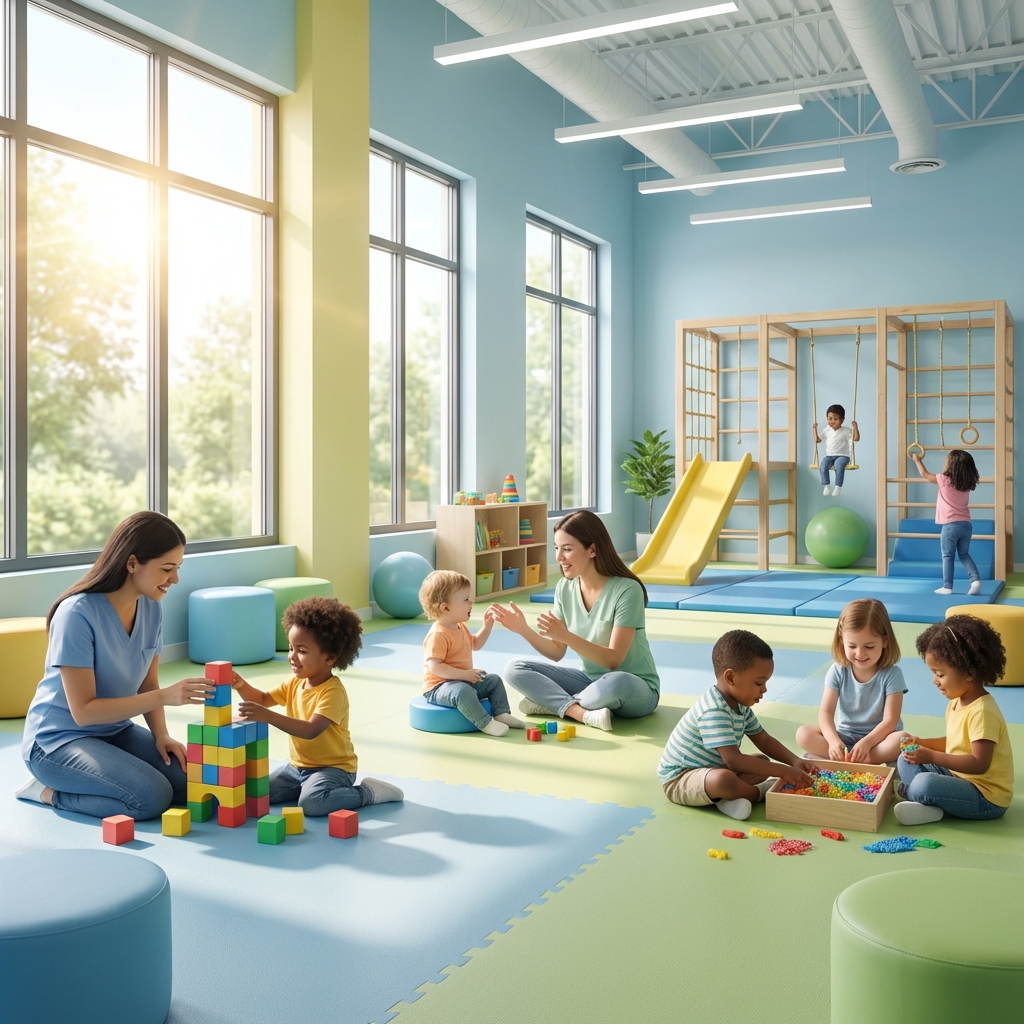
Our sensory integration therapy is delivered in a specially designed sensory gym with equipment tailored to meet each child's unique sensory needs. We create a fun, engaging environment where therapy feels like play.